
How to properly prepare your child for school?
Children’s desire for independence appears very early. The child tries to eat, drink, and dress himself. At about 3 years old, he says his first “I myself.”From the moment a mother gives a child a book with pictures, he has a desire to read for himself, become familiar with the letters, and read the name of a book or store. You can often see a baby with a book, moving his finger and “reading.” Nowadays, many children can read and solve problems even before school. Does this mean that they are ready for socially significant and assessed learning activities? No, of course.
The fact is that 6-year-old children recognize themselves not as adults, but as children. If parents often hear the words “I’m already big” from children, then older preschoolers often say “I don’t know how to do this,” “I’m still small.” It is precisely the vision of oneself as small and unable to do so that is an important prerequisite for a child’s education at school. During this period, the child has a desire to do something meaningful, take a new position in society, and become a schoolchild.
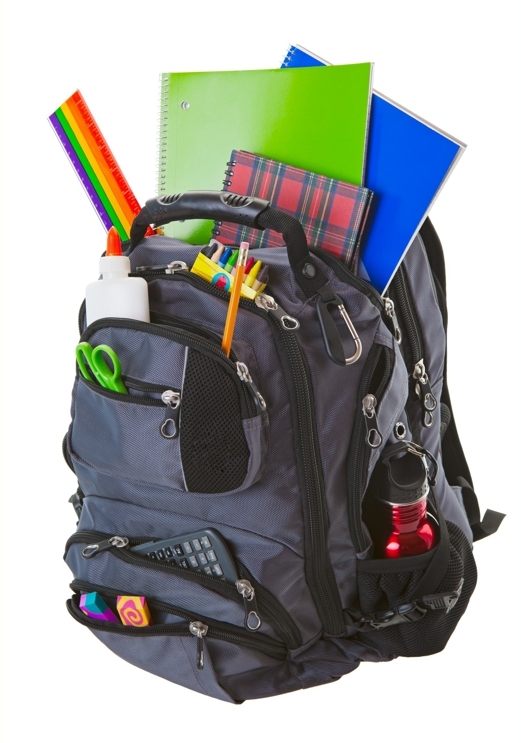
The attitude towards the upcoming schooling does not develop on its own. Already coming to school, children have one or another view of learning. Looking at older children, brothers, comrades, children early begin to be interested in what school is, what they do there, how lessons are taught, enough for a child buy a backpack so that he feels close to the school. This readiness to learn, of course, needs the support of relatives.
The importance of parental support
If the family cultivates the right attitude towards learning, then when children enter school they already have a clear idea of what awaits them ahead. When asked why one should study at school, they answer as follows: “To become smart and educated,” “To become a good doctor and treat the sick,” etc. Such answers indicate that. that children develop a motive for learning, they want to recognize themselves as future members of society.
adults who deliberately cultivate a negative attitude towards their future school life do the wrong thing:
- they are intimidated by the excessive severity and discipline of the school (“When you go to school, they will put you in your place!”);
- express unjustified pity for the baby (“Soon, poor thing, you’ll go to school, you won’t even have time to play!”);
- talk in the presence of the child, discussing the future teacher at school, expressing hostility or negativity;
- predict troubles and failures that await the child at school;
- they are afraid that it will be difficult for the child to join the new team, etc.
Intimidating a child with the difficulties of school and feeling sorry for him will make the child powerless when faced with problems at school.
The child must feel trust and approval from adults who believe in him and understand his difficulties. The child must feel how much respect from adults has increased, his rights and responsibilities have changed.
Features of the inner world of six-year-old children
Six-year-olds who start school are halfway through the transition from one period of life to another. At school, children are more likely to choose art, physical education and music over lessons such as reading and math. Attention, memory and thinking remain “preschool”. The school does not satisfy the child’s need for play or the usual activities of designing or modeling. It is very important that this gap is filled at home. Psychologists have noticed that a child who has not played enough at one time retains a high need for play at school age. And, conversely, if a six-year-old child is given a lot of time for various games, then the need for them is “saturated” and the child is morally ready for a new leading type of activity – study.
It is very important for a child at this age to see parents’ interest in his school life. You need to be interested in what they did today, who the child communicates with at school, what subject they like best, etc. It is also very important to be careful in assessing success. Let your child understand that if something didn’t work out today, it will definitely work out next time. You shouldn’t “praise” the child excessively either, and you shouldn’t find fault with every little thing. From this, a student can develop a “marking psychology.” This is when a child studies not for the sake of gaining new knowledge and skills, but for the sake of good grades, so that his parents or teachers will praise him.
Correct load dosage
Six-year-olds quickly get tired from sitting for a long time at a school desk and from increased mental stress. This is due to age-related characteristics of the development of the nervous system. Even at school they have a 35-minute lesson and a physical session in the middle of the lesson to relieve tension and relax their backs.
When starting your studies, it is very important to follow the following rules:
- sufficient exposure of the child to fresh air;
- day rest;
- rational healthy diet;
- do not overload the child with additional school-type sections.
Any non-compliance with the regime and overload do not improve, but on the contrary, worsen children’s perception of new material. This will affect the quality of study and the child’s desire to learn.


