
Basics of localization and elimination of fires
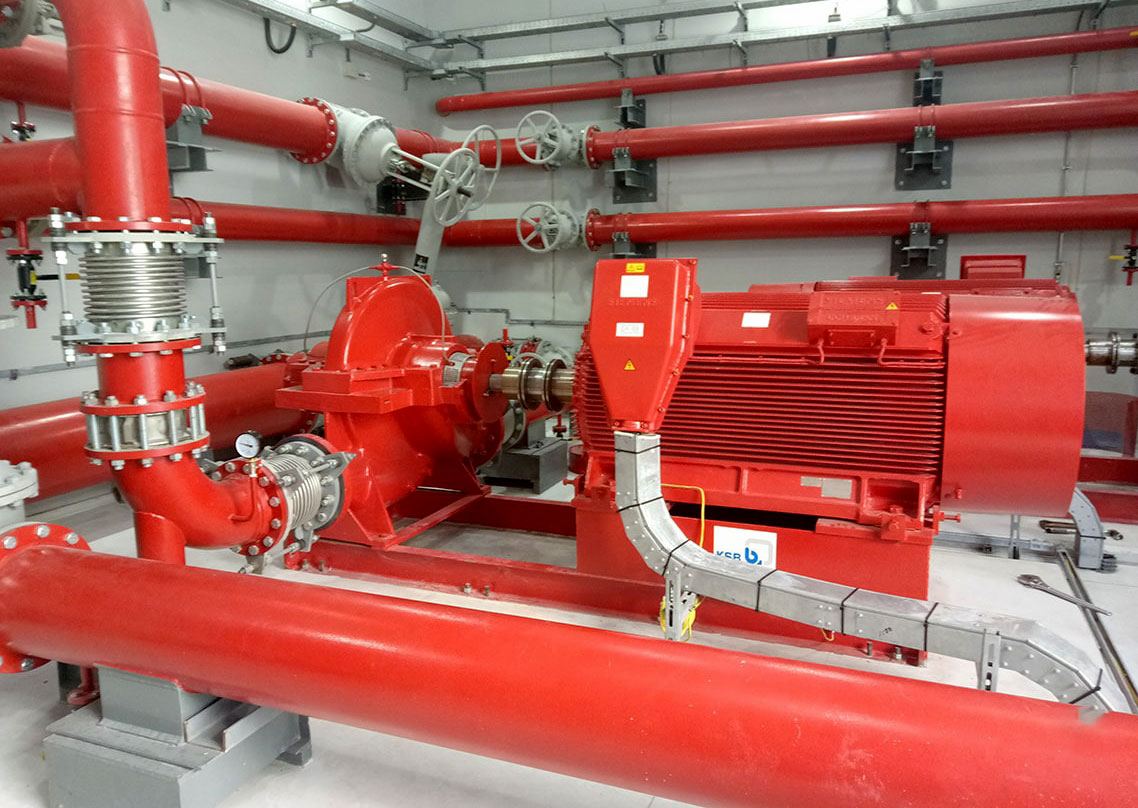
often, the choice of equipment and means of fire localization is probably the last thing on the minds of company managers. Most are confident that ignition will happen anywhere but at their enterprise. And they are very surprised when it happens that they extinguish the flame using any available means, and then resolve issues with the control authorities.
Whether you like it or not, fire safety is a necessary part of an enterprise’s expenses, which cannot be excluded from financing. But you can save money if you skillfully calculate the appropriate complex and accurately determine the specifics of the object. How to do this correctly? What is the method of operation of automatic fire extinguishing devices and who can help figure it out? The answers are in this article.
What is an automated fire extinguishing installation and what does it do?
AUPT is a complex of means and equipment that is turned on at a critical temperature and smoke level at the observed object. This very system localizes and eliminates the source of the fire during its occurrence. Simply put, an independent installation can:
- Monitor increasing smoke levels, fire source, and temperature;
- Turn on sound and light detectors;
- Manage the evacuation of employees;
- Paralyze the fire until the Ministry of Emergency Situations arrives.
Scope of application of AUPT
The automated system contains extensive customization options. It is required for installation at various sites:
- car services and repair shops;
- free-standing data centers and server rooms;
- retail network facilities;
- archives and storage facilities;
- garage complexes and parking lots;
- production premises;
- office buildings;
- warehouses and wholesale centers.
Classification of automatic fire extinguishing devices and specific application
The equipment used to limit the initiation of a flame varies in its design features. And it is divided into two types:
- Aggregate;
- Modular.
In addition, the installation is equipped with unique blocks. And it allows you to manage the range of measures manually or through modern digital systems. And also, fire water supply pumping station equipped with control and shut-off valves; two collectors:
- devices for maintaining and monitoring water pressure;
- discharge and suction;
- water-air valve;
- compressor.
In this regard, the AUPT is capable of working with several types of automatic fire extinguishing methods:
- volumetric complexes;
- surface devices;
- local nodes;
- robotic installations.
But what are automatic fire extinguishing systems with different contents? Is powder or foam best?
Water installations
Complexes that operate on water differ in the design of the sprayers:
- deluge – more often used as a water barrier in places with large crowds of citizens and when extinguishing warehouses with equipment or oil products;
- sprinklers – can be suitable for buildings, storage facilities and premises with a high level of fire hazard, when fire destruction is carried out simultaneously over the entire area of the facility.
The main advantage of such units is their low operating cost and the ability to transport water over long distances. At the same time, the devices are most effective for extinguishing fires when they are integrated into the building’s plumbing system. But there are also disadvantages: despite good reliability, the system is not suitable for localizing a fire in an office where there is electrical equipment.
Gas set
A set of elements for extinguishing a fire source, where the following are used:
- inhibitors or freons – such complexes are extremely small-sized and effective for small industries;
- diluents (for example, argon or nitrogen) – installations with such contents have significant volumes. Ideal if the space allows it;
- perfluoroketones – designs are highly environmentally friendly and have a wide range of actions. Do not cause damage to property. They have been used recently and are considered a successful novelty.
Powder complexes
The most common option. Largely due to the wide scope of use. Such installations have the ability to destroy fires of varying degrees of complexity. They are also used in facilities where it is necessary to extinguish electrical equipment that is turned on.
Moreover, an independent complex is recommended for location close to electrical switchboards, throughout the entire area of the utility room, or for pinpoint localization of the source of fire. But there are disadvantages. The powder system cannot be used in warehouses where flammable materials and chemical mixtures that can smolder without oxygen are stored.
Foam kit
A set of units that are designated for placement at storage facilities for petroleum products, flammable compounds and combustible materials. They are divided into deluge and sprinkler systems. AUPT foam sample is identical in operating features to water systems, not counting the separate storage of substances and the presence of a reservoir.
They are very effective when extinguishing oil products. Similarly, one can note the ability to spread quickly, which helps to quickly stop the fire. The disadvantages include the slow filling of volumes and the high cost of operation. In addition, the foam composition must be removed.
Aerosol installation
The principle of operation is based on the combination of components that can quickly paralyze the source of ignition. The system has been known for more than two centuries; initially, a mixture of clay and water was used for filling. But due to excessively low efficiency, the creation was frozen. Current installations are justified only for targeted fire extinguishing. They should not be used in storage areas:
- Self-igniting and flammable materials;
- Pyrophoric compounds and metal powders;
- Chemical liquids and polymers prone to smoldering.
Aerosol installations are not environmentally friendly and are very harmful to the respiratory system of any person. For this reason, they are not installed in places with large concentrations of citizens that cannot be quickly left, or where there is no emergency exit. It is not worth not considering such a rule. When conducting an audit, the EMERCOM inspector pays special attention to such things.
Which buildings are intended to be protected by automatic fire extinguishing systems?
According to the wishes of the AUPT owners, the complexes can be placed in a variety of buildings. But there are also mandatory requirements. Platforms are required to be in public, warehouse, industrial buildings and structures, in accordance with 123 Federal Laws and relevant regulations and resolutions. Moreover, the devices are installed in subsequent buildings:
- Isolated and underground parking;
- Data processing centers and server rooms;
- Storage facilities and mines;
- Sites for cultural and social purposes;
- Workshops in the basement.
Technical parameters for various types of automatic fire extinguishing systems and installations
The main set of laws concerns the methods of launching the AUPT, the volume of foam (water, gas, etc.), response speed, control methods, reliability of components and other parameters. The duration of release and inertia must necessarily meet the specified needs. Changes are allowed within specified limits. Details can be clarified with a competent specialist.
What should automatic extinguishing installations provide?
There are no exceptions in this case. Each modern automated fire control system must meet technological requirements and contain the following components, capabilities and assemblies:
- start – online, remote, manual, local and automatic, with protection and output;
- primary documents – certificate, technical passport, project and acceptance certificates;
- water systems with automatic control;
- timely supply, draining and filling of collectors;
- automatic switching to a spare power source;
- sprinklers, nozzles and modules for each zone;
- automatic restart to backup electric drives and pumps;
- signals when the liquid level and pressure drop or break;
- grounding and grounding;
- fire boxes and stations protected by partitions and doors;
- protected control nodes;
- light and sound detectors;
- permissible alarm triggering when pressure changes;
- delayed response to personnel evacuation;
- auto-check and monitoring of proper operation;
- tank, cylinders and remote control for centralized systems;
- insulated buttons with mesh covers or glazing;
- mandatory zoning on collectors;
- danger warning signs;
- timely removal of water, powder, foam or gas.
How can you calculate your fire extinguishing system yourself?
It is possible, having special knowledge, following the rules and methods of working with each type of automatic fire control device. It is much easier and faster to contact a specialist who will not only select the equipment for the purposes of your enterprise, but will also take into account the following data:
- Length, diameter, length of pipes and number of connections;
- Clearance from the wall for sprayers;
- Estimated flow rate, intensity and duration of irrigation;
- Volume and system properties of the installation;
- Detailed hydraulic pressure calculation;
- Mandatory zoning of premises and tightness parameters;
- Standard size, pitch, installation height, place for sprinklers and sensors.
Current AUPT systems highly effectively localize the source of a fire even before the arrival of a fire brigade. This will generally help the company owner to avoid major material damage and prevent casualties.


